Spatial research archive · 2026
NodeLink
A node-based note system exploring whether deliberate interaction friction can
make information feel more personally constructed and memorable.
Unity C# UI/UX
Role Solo dev
Tools Unity, C#
Platform Desktop / WebGL preview
Context Independent interface prototype
OVERVIEW
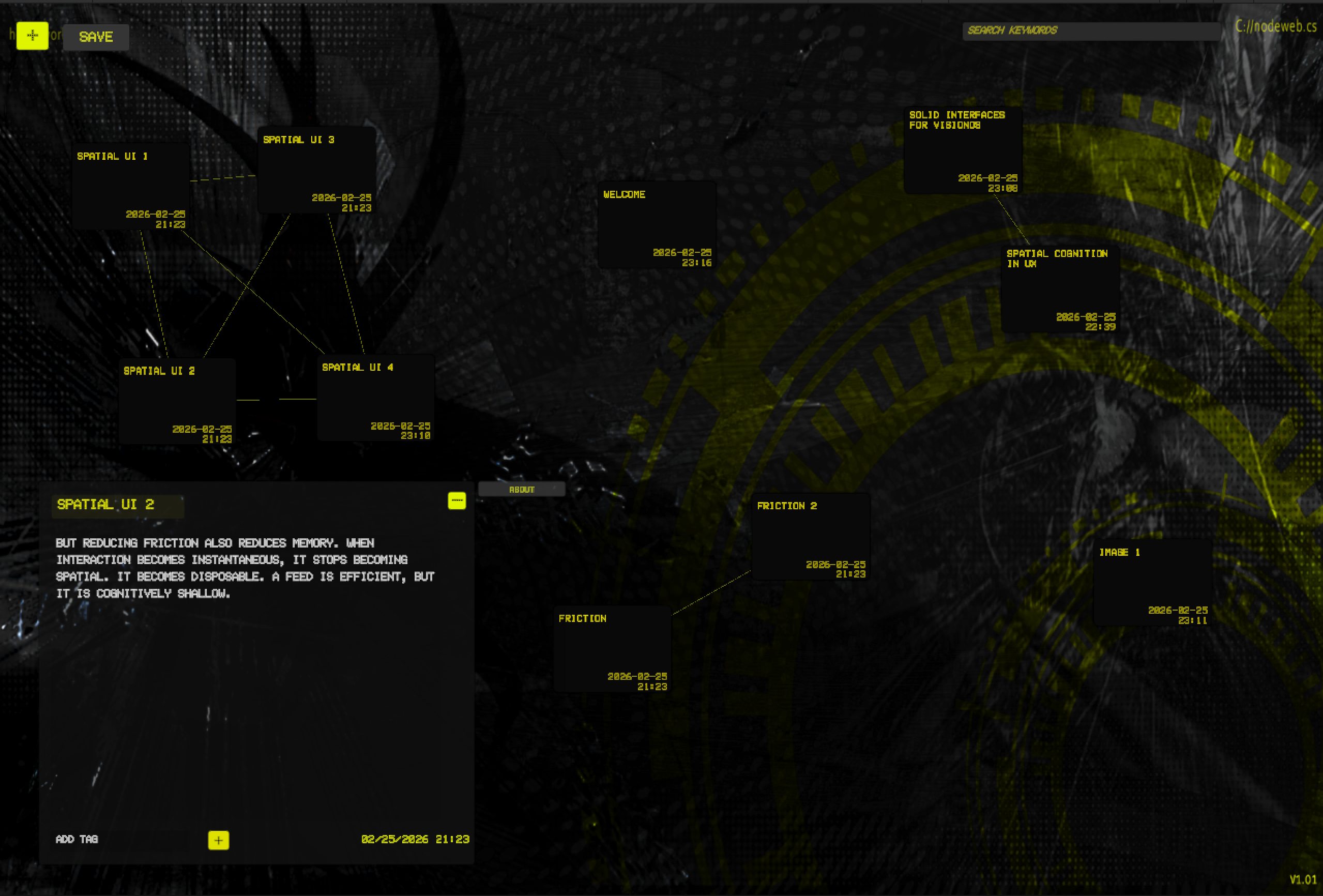
NodeLink is a spatial archive for exploring notes and research outside the
usual folder, list, or document structure. Notes exist as independent nodes
inside a bounded field, and the user creates meaning through placement,
connection, tagging, and repeated navigation.
The project deliberately introduces some resistance into the interface. Rather
than treating every extra action as a defect, it asks whether constructing and
revisiting a personal spatial system can increase attention and attachment to
information, and also explores alternative methods of notetaking.
Try the browser preview!
DETAILS
Concept
NodeLink replaces fixed hierarchy with a spatial field of interconnected
notes. The user’s relationships and repeated interaction make
this effective, rather than being made from a prescribed folder structure.
open full explanation →
Technology
Unity UI prefabs and C# managers manage node creation, positioning,
connection, tags, interface behavior, and distribution as desktop
and browser builds.
open full explanation →
Process
The application moved from prefab assembly to custom interaction
logic, layout refinement, edge-case debugging, interface polish, and
separate desktop and preview deployments.
open full explanation →
Constraints
Unwanted spawn positions, awkward interaction states, persistence
differences, and an all-pairs relationship calculation shaped the current
prototype and its next technical steps.
open full explanation →
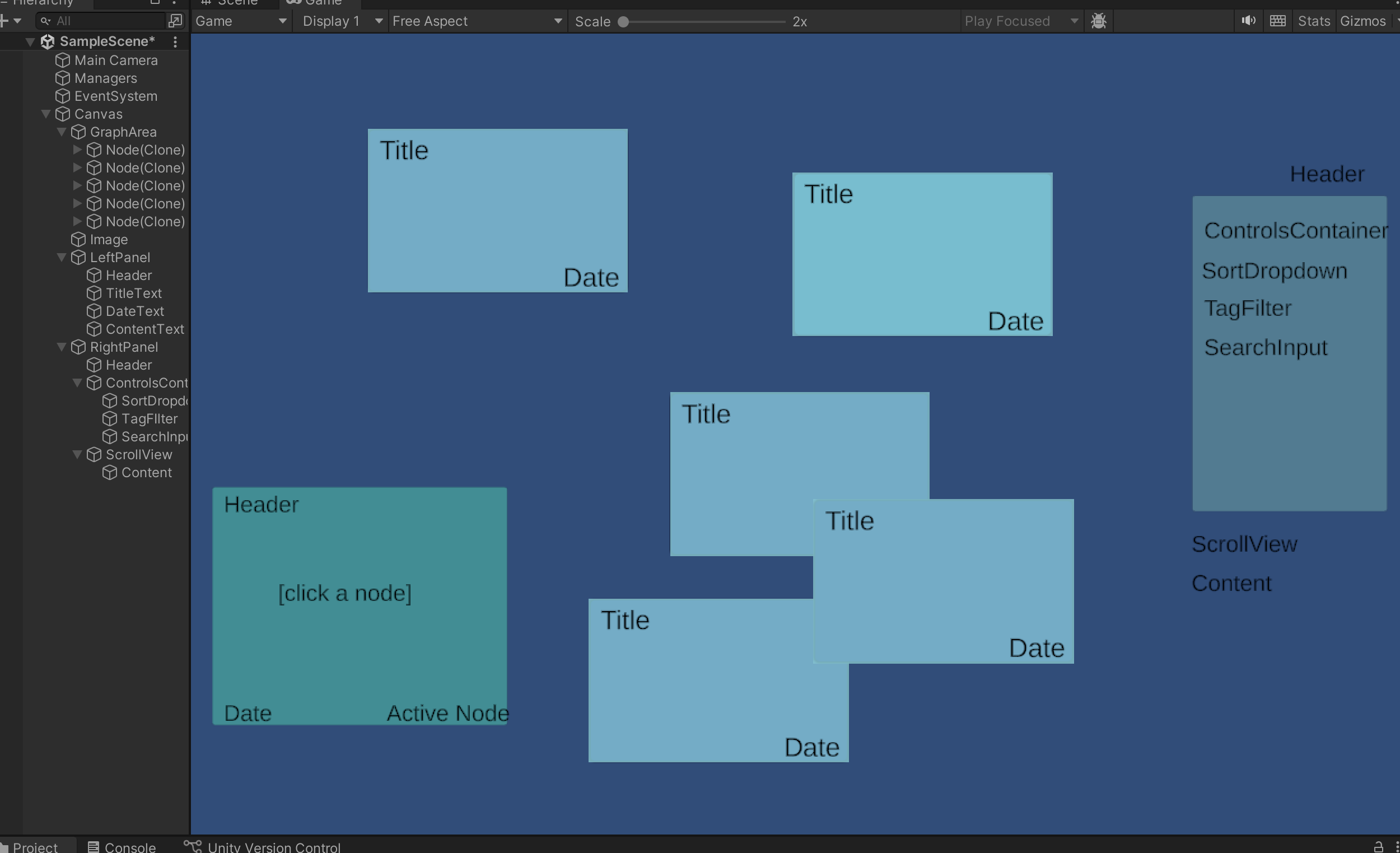
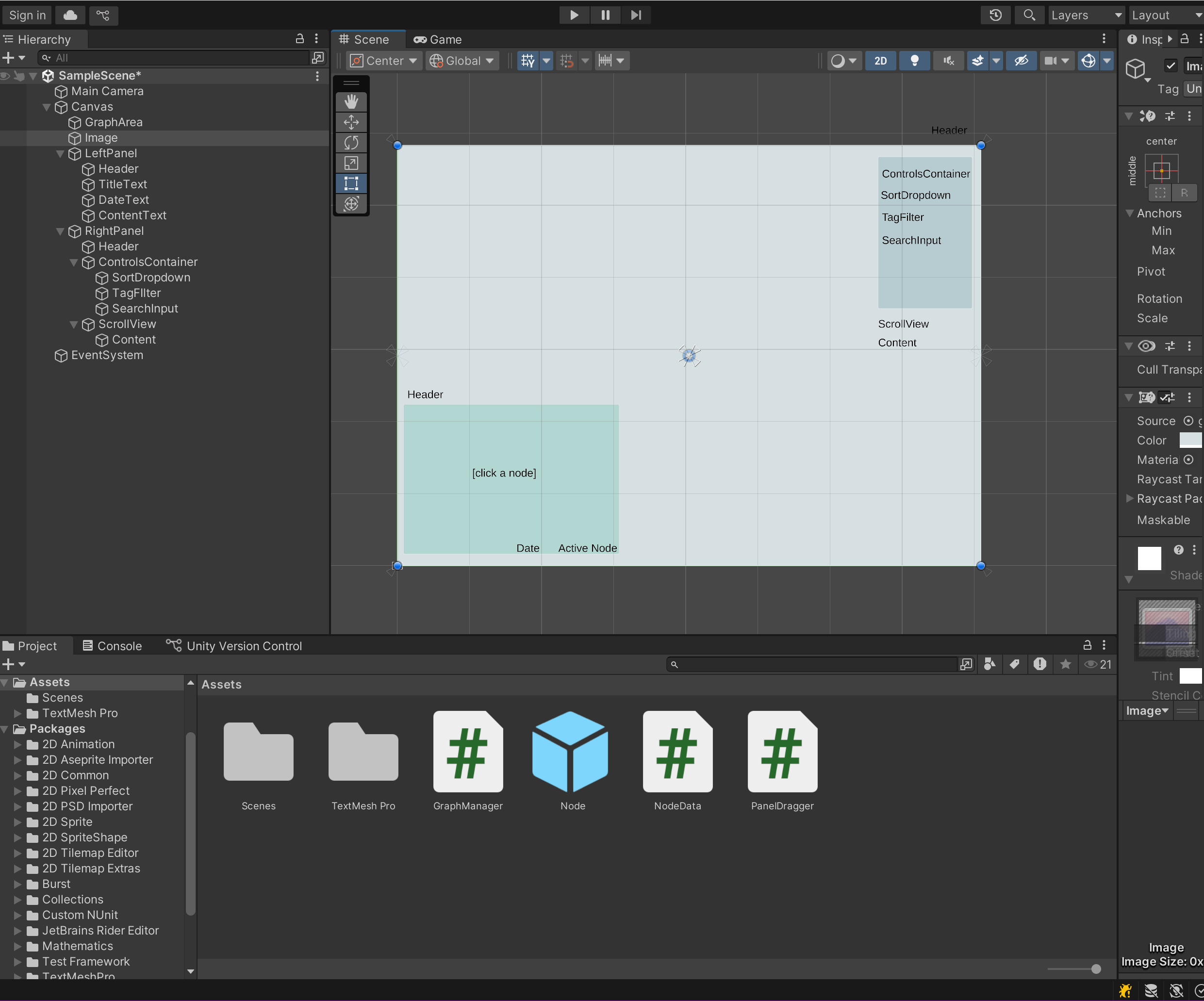
Early blockout
Prefab and layout development
Completed interface before final detailing
×
Technology
NodeLink was built in Unity using the engine’s UI and canvas systems. Notes
are represented through reusable prefabs, while C# scripts coordinate
creation, state changes, positioning, tags, connection behavior, and
system-wide interaction.
Each note exists as an independent object with content, tags, position,
connections, and interaction state. A larger manager coordinates object
creation and the behaviors that affect the archive as a whole.
The application was distributed as a desktop executable and adapted into a
WebGL demonstration hosted on itch.io. The browser version omits persistence
and is presented as a preview rather than the canonical build.
×
Process
Development began by assembling the reusable node and interface prefabs. Once
the basic visual system existed, behavior was defined through C# scripts and
connected to a larger manager responsible for creation and coordination.
Early blockout establishing the spatial field and basic node language.
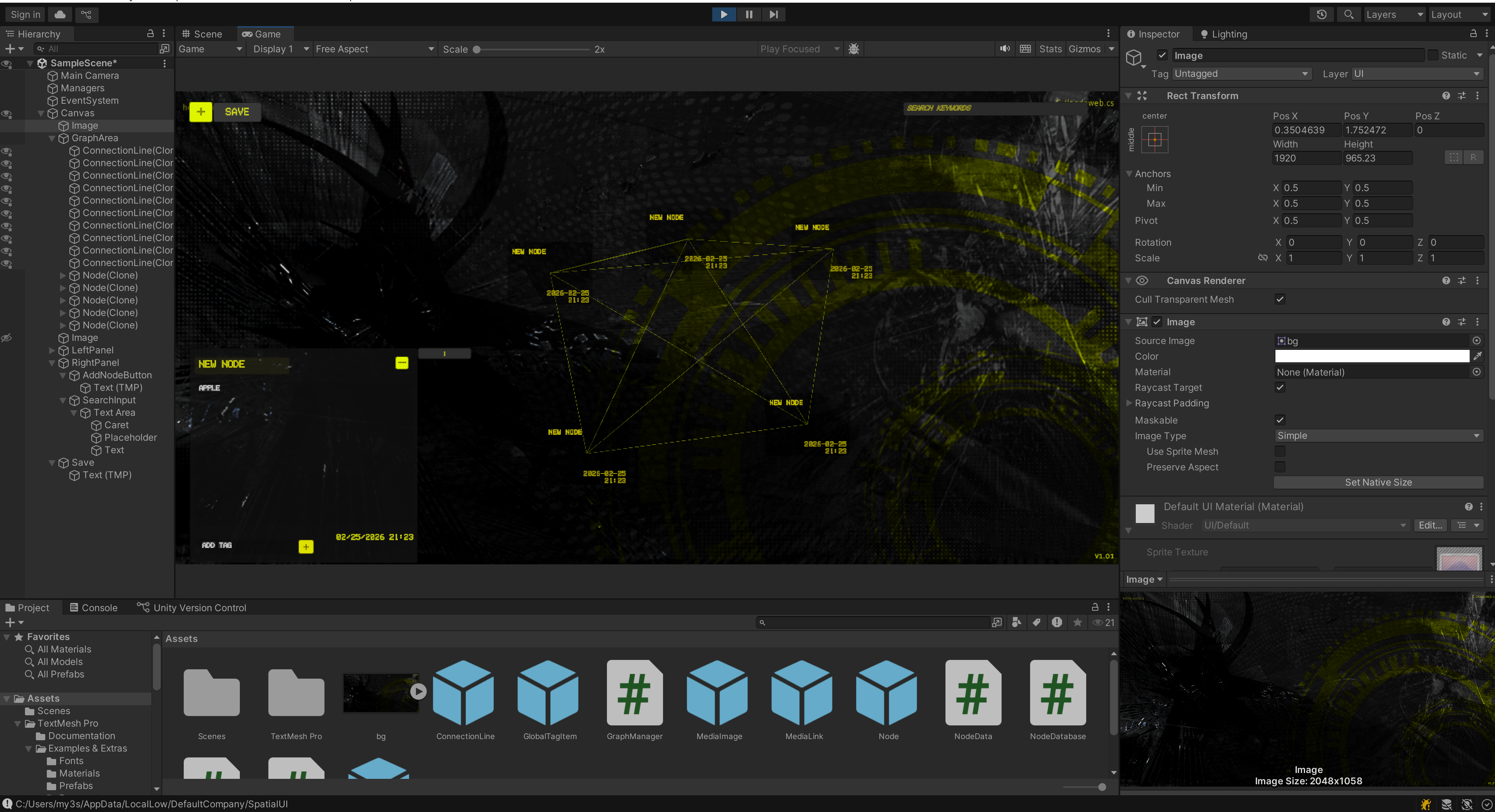
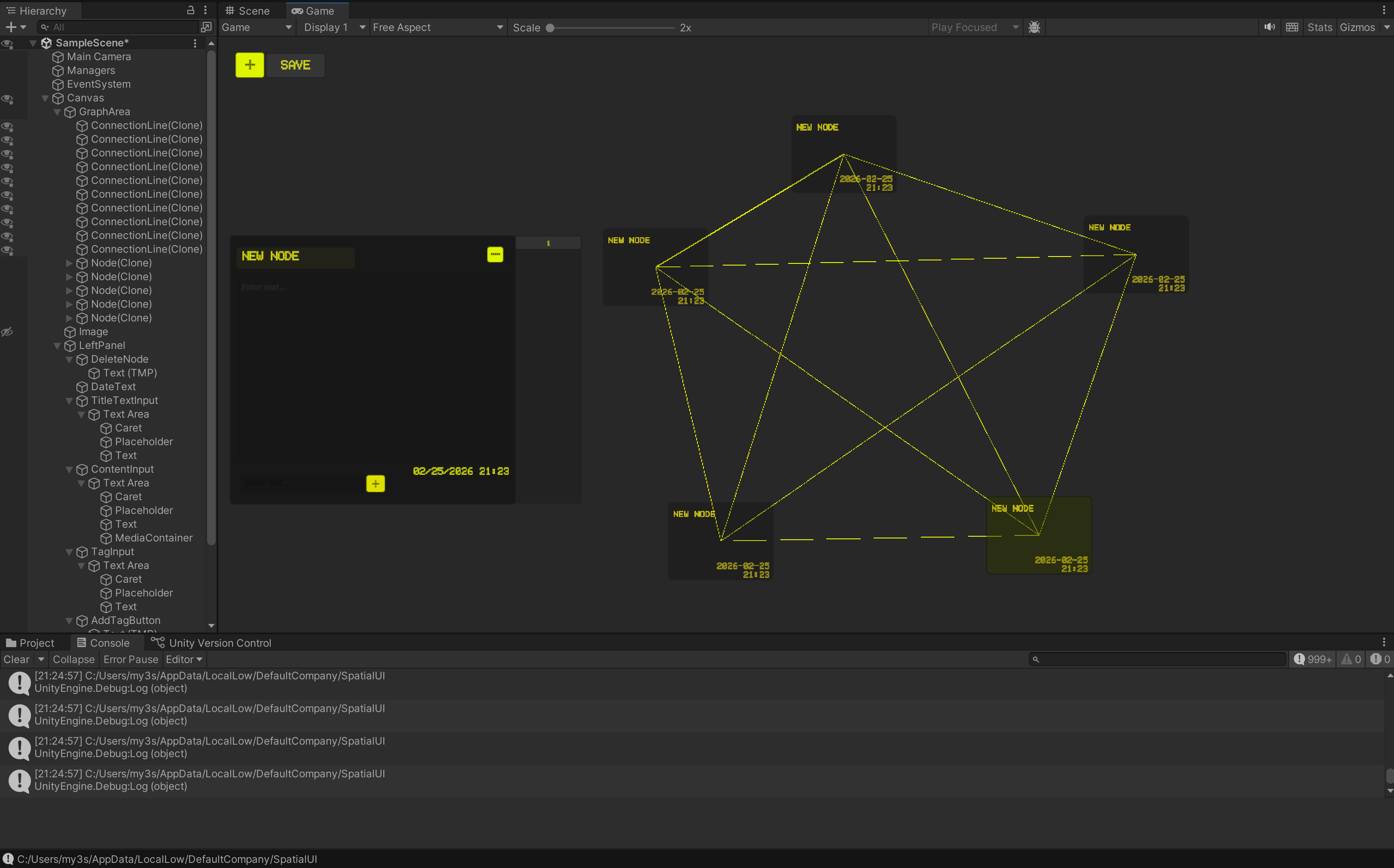
The next phase focused on layout, input behavior, spawning, tags, and the
relationship between individual nodes and the larger archive. Developing
directly in Unity exposed edgecases that were not obvious during my interface
planning, including unwanted spawn positions and interaction states that could
leave elements difficult to control.
Refining prefabs, layout, and custom interaction behavior.
After the system was functional, the visual hierarchy and interaction flow
were refined. The desktop executable remained the complete application, while
the browser build was prepared as way to demonstrate the
interaction model to others.
Completed interface before the final detailing and presentation pass.
×
Constraints
Many of the largest problems appeared only after the interface became
interactive. These included unwanted spawn points, ambiguous selection states,
spatial overlap, and usability problems that were difficult to predict from
the initial layout.
The current relationship logic compares nodes against other nodes during
updates. A naïve all-pairs implementation grows approximately quadratically,
O(n²), rather than linearly. At 200 nodes, there are roughly
19,900 unique pairs before other update work is included.
The prototype remained usable at the tested scale, but if I were to refine it
further and expand the scale I would have to consider this seriously.